Get Your Spain Residency and Live Legally in Europe
- 1–3 month processing
- Price on Request
Legal residency in Spain under the right grounds for your situation without guesswork or bureaucratic delays.
- Validity1–3 Years
- Processing1–3 Months
- Schengen Access90 / 180 Days
- Path to PR5 Years
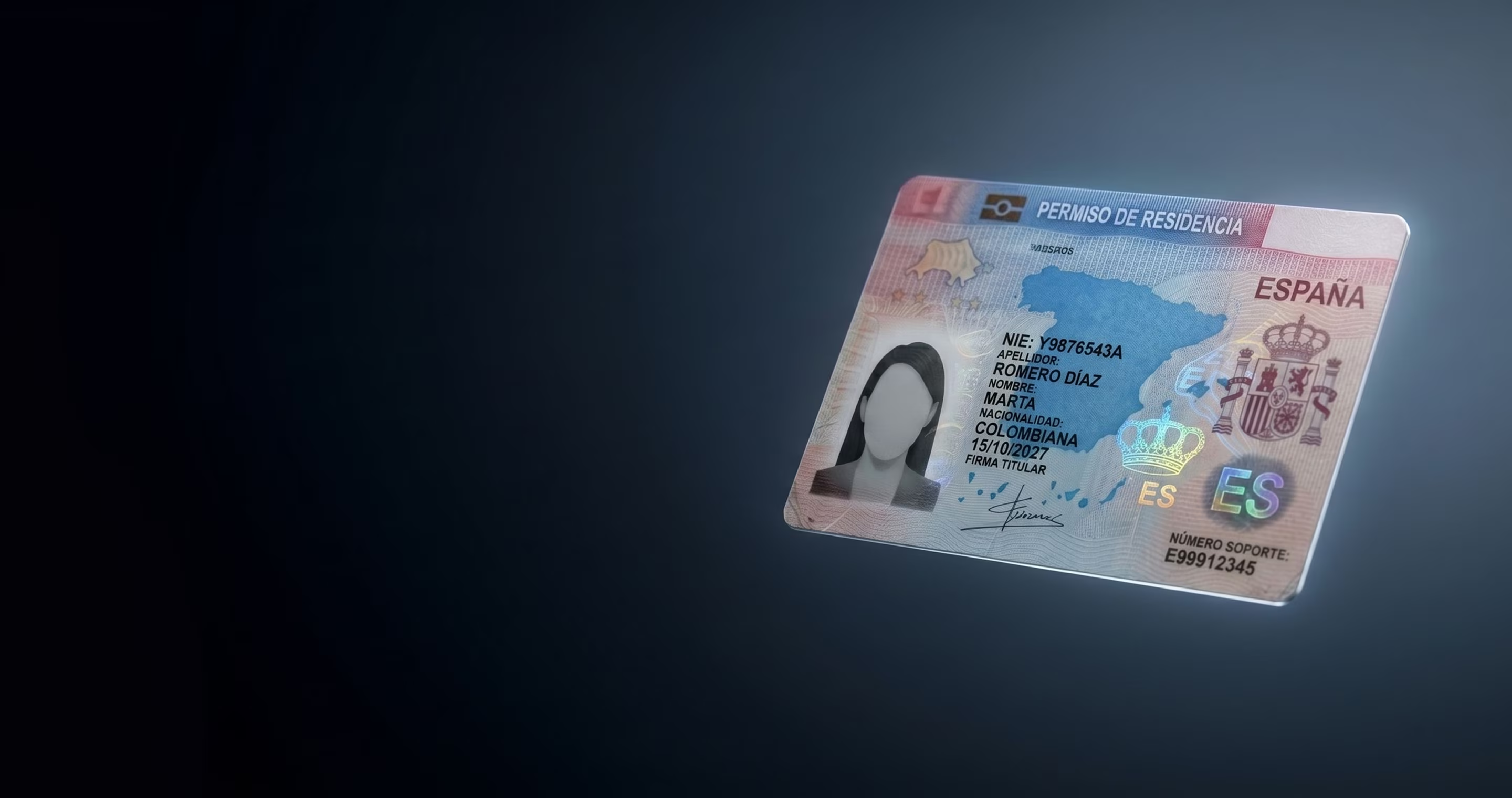

What Is a Spain Residency Permit?
An official government authorisation to live in Spain legally. Issued for one to three years with the right to renew. The type of permit determines what you can do — work, run a business, or live on passive income.
Legal Residency
Right to live in Spain on a permanent basis and freely enter and exit the country.
Schengen Access
Travel across the Schengen zone for up to 90 days in any 180-day period without an additional visa.
Family Inclusion
Include your spouse and minor children in the same application under dependent status.
Healthcare Access
Access to Spain's public healthcare system as a registered legal resident.
Banking and Property
Open bank accounts, purchase real estate, and register a vehicle in Spain.
Work or Business Rights
Depending on the permit type — work locally, freelance for foreign clients, or operate a business.
Education Access
Enrol children in public schools and access Spanish universities and education system.
Path to Permanent Residency
Build toward long-term EU residency status after five years of continuous legal stay in Spain.
Spain Residency Works Well If You...
Have passive income, savings, or investments abroad and want to relocate to Europe without local employment.
Work remotely for a foreign company or freelance for international clients and need a legal European base.
Plan to register as self-employed (autónomo) or open a business entity in Spain.
Have a confirmed job offer from a Spanish employer and need a work and residency permit.
Want stable long-term legal status in Europe for yourself and your family with a clear path to permanent residency.
How to Get Your Spain Residency Permit
A structured process from eligibility assessment to your residence card in hand. We manage every step on your behalf.
- 1
Eligibility Assessment
We review your income, employment status, and profile to recommend the right permit type.
- 2
Document Preparation
We compile the full document checklist tailored to your chosen permit type and personal situation.
- 3
Application Submission
The application is filed through the Spanish consulate in your country of current residence.
- 4
Consulate Review
The consulate or migration authority assesses the application. Processing typically takes one to three months.
- 5
Visa Issuance and Entry
Once approved, you receive a national visa and travel to Spain within the validity window.
- 6
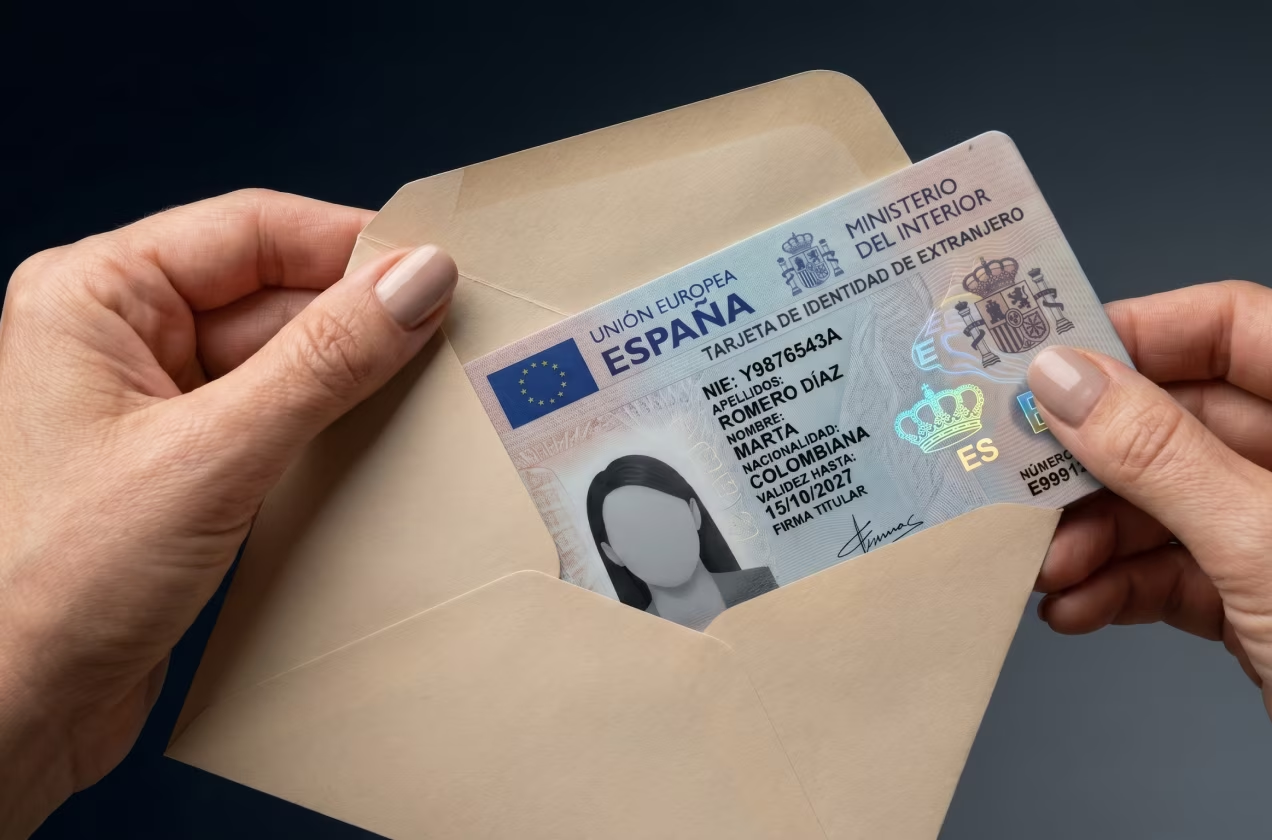
TIE Card Registration
Within 30 days of arrival, you register with local authorities and obtain your physical residence card.
- 7
Renewal and Support
We assist with permit renewal, family additions, and any changes to your residency status.

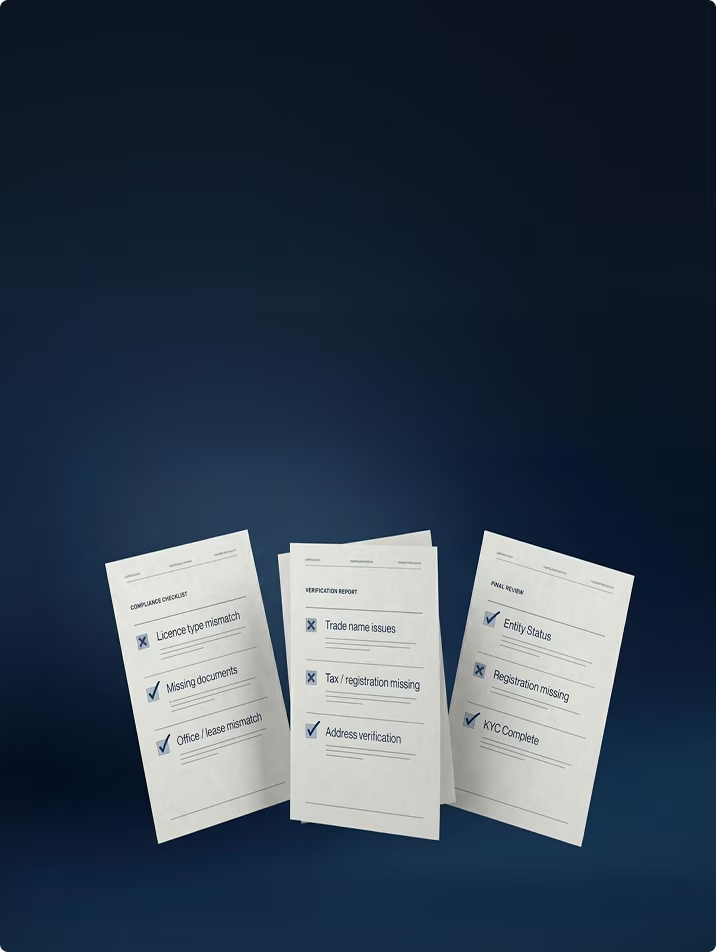
We don’t just help you get residency. We support you long after
What we actually do to ensure a smooth process and long-term support
Assess Your Options for Free
We identify the right programe or permit based on your goals, profile, and timeline
Prepare a Document Package
We compile the exact documents required to your case, not a generic checklist
Handle the Full Submission
We file your application through the correct authority
Manage All Follow-ups
We respond to authority requests, clarifications, and queries without delays
Support Your Arrival and Settlement
We assist with TIE registration, bank account opening, and your first steps after relocation
Renew and Expand When Ready
We handle permit renewals and family additions as your situation evolve
Spain Residency: What You Need to Know Before Applying
Documents from Abroad. Apostille and Translation Requirements
Every document from outside Spain needs to be apostilled in its issuing country. Only then will Spanish authorities accept it. An apostille is an official certification that verifies the document for use abroad. Most documents must be translated into Spanish. This should be done by a certified translator who is approved by Spanish authorities. This rule applies to financial statements, criminal background checks, employment contracts, and academic certificates. Gathering, verifying, and translating documents from different countries can be time-consuming. This is often the most time-consuming step in any Spain residency application. Errors at this stage are the leading cause of rejection.
What Happens After You Arrive
Arriving in Spain with an approved visa is only the first step. Within 30 days, the holder must register at the local police station or immigration office. This will get them the TIE card, which is the main identity document in Spain. Before this appointment, the applicant must complete Empadronamiento. This is the municipal registration at the local town hall. Most public services require this registration. It is also needed for the TIE appointment in many municipalities. The TIE appointment needs its own application. You must also provide supporting documents and pay a government fee. In some places, there can be long wait times for a slot.
From Residency to Permanent Status and Citizenship
After five years of continuous legal residence, holders of any standard residency permit may apply for long-term resident status, which grants indefinite rights to live and work in Spain and access rights across the European Union. Spanish citizenship is available after ten years of legal residence, with the requirement reduced to two years for nationals of Latin American countries, Portugal, the Philippines, Equatorial Guinea, and Andorra.
Tax Residency Considerations
Spending more than 183 days in Spain within a calendar year establishes tax residency, meaning worldwide income becomes subject to Spanish personal income tax. Standard rates range from 19 to 47 percent depending on income level. Digital Nomad Visa holders may opt into the Beckham Law regime, capping tax at 24 percent on income up to EUR 600,000 per year. Advance planning of tax exposure is essential before relocating, particularly for those with income from multiple jurisdictions.

Let’s Discuss Your Case
Share your contact details and we’ll reach out to discuss how we can help
Frequently Asked Questions
Can I include my family in my Spain residency application?
Yes. A spouse or registered partner and minor children can be included as dependants in most permit types. Each dependant requires their own supporting documents including proof of relationship and valid health insurance. Family members receive the same permit type and duration as the main applicant.
Do I need to live in Spain full time to keep my permit?
Requirements vary by permit type. Non-Lucrative holders should not spend more than six consecutive months outside Spain to avoid complications at renewal. Digital Nomad and employment permits generally require active presence. Extended absences should be discussed with your advisor before travel.
Can I switch from one permit type to another?
Yes, in most cases. For example, a Non-Lucrative holder can transition to a Digital Nomad or self-employment permit if circumstances change. The switch is processed in Spain through the immigration authority rather than through a consulate abroad.
What is the TIE card and when do I need it?
The TIE (Tarjeta de Identidad de Extranjero) is your physical residence card issued by Spanish provincial authorities. It must be obtained within 30 days of entering Spain after visa approval. The TIE is your primary identification document in Spain for banking, healthcare access, and official registrations.
How long does the full process take from start to finish?
From initial consultation to TIE card in hand, the process typically takes three to five months depending on permit type and the consulate processing your application. Non-Lucrative and Digital Nomad permits generally move faster than employment-based permits.
Let’s Discuss Your Case
Share your contact details and we’ll reach out to discuss how we can help